Financial Literacy for Waste Picker Families: From Moneylenders to Jan Dhan Accounts
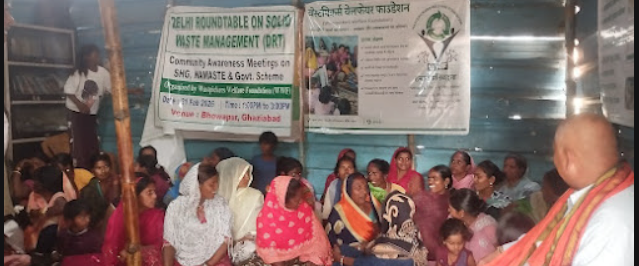
Ask a waste picker mother what she fears most and she will rarely say poverty. She will say the moneylender. A single illness, a single flood, a single wedding, and the family is indebted at 10% a month — and the compounding starts to eat the household's future.
Financial literacy, in this context, is not a nice-to-have. It is the difference between resilience and ruin.
The Baseline We Start With
Among the women we first enrol in our SHG programme, the typical baseline looks like:
- No individual bank account
- All household cash stored at home, accessible to the husband
- No knowledge of a PIN, an ATM, or a passbook
- Informal borrowing at 10%+ per month from one of 2–3 neighborhood moneylenders
- No insurance product of any kind
Our Six-Month Financial Literacy Module
Delivered inside the SHG meeting rhythm, the curriculum covers:
- Cash vs bank — physical demonstration of a passbook, a cheque, a debit card
- Opening a Pradhan Mantri Jan Dhan Yojana account — zero-balance, in the woman's own name, with Aadhaar-based KYC
- UPI onboarding — hands-on practice of PhonePe or Google Pay with a ₹10 peer-to-peer transfer
- SHG internal lending — how to save ₹100/month, how the group pools, how lending at 1% works
- Insurance basics — Pradhan Mantri Jeevan Jyoti Bima Yojana (₹436/year life cover), Pradhan Mantri Suraksha Bima Yojana (₹20/year accident cover)
- Atal Pension Yojana — a small but meaningful retirement stream for the unorganised sector
- Avoiding fraud — why never to share OTP, PIN, or Aadhaar QR photographs with anyone
- Reading a bill — electricity, water, phone recharge
What Changes in 12 Months
- Over 80% of graduates have a live Jan Dhan account in their own name
- Average pooled SHG savings crosses ₹80,000 per group
- Moneylender dependency drops sharply — most small emergencies are now met from the group's own corpus
- Women begin making modest independent financial decisions — a child's school fee, a minor household repair
Why Small Numbers Matter
₹100 a month is trivially small by middle-class standards. Inside a waste picker household it is the first line of control a woman has ever had over cash in her own name. That shift is where economic empowerment actually begins. The literacy programme, not the tailoring machine, is often the silent hero.
How to Support
One fully funded financial literacy cycle for a 15-member SHG — trainer, materials, bank-linkage facilitation — costs approximately ₹18,000. Individual donors, banks under PSL obligations, and fintech partners can underwrite a cohort at a time. Write to us.