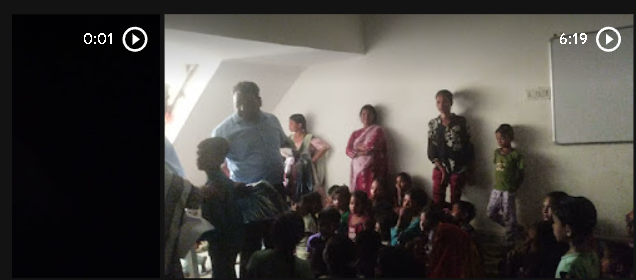
Self-Help Groups for Waste Picker Women: Economic Independence Through Stitching and Tailoring
In a waste picker household, the woman usually carries two shifts. The first begins at 4 AM when she joins her husband on the sorting rounds. The second begins whenever she gets home — cooking, fetching water, caring for children and elders. When scrap prices crash, as they did during the pandemic, both shifts yield less than ₹150 a day for the family. A second income is not a luxury. It is survival.
The Women Empowerment Programme at Waste Pickers Welfare Foundation is built on a simple premise: if women can earn ₹3,000–₹6,000 extra each month from skills they can practice at home, the household's floor rises — and so does the woman's voice inside it.
The Three-Stage Model
Stage 1: Skilling
A six-month stitching-and-tailoring course runs out of our Shahdara centre. Twelve sewing machines, two master trainers, and cohorts of 20 women at a time. Curriculum covers basic hand stitches, machine operation, measurements, pattern making, salwar-kameez and blouse construction, children's wear, and simple alterations. Attendance is tracked; women who miss more than four sessions are visited at home to understand the reason and reschedule.
Stage 2: Self-Help Group Formation
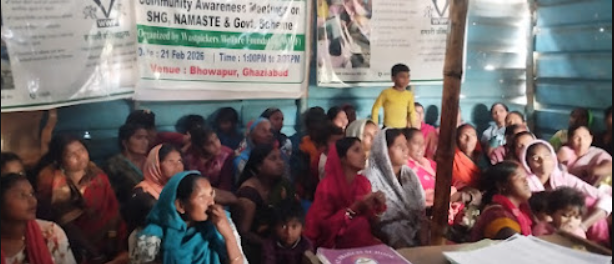
Graduates are organised into SHGs of 10–15 members each. Every group elects a president, a treasurer, and a secretary from within. Monthly savings of ₹100–₹200 per member are pooled and lent internally at 1%–2% per month, far below local moneylender rates of 10% or higher. SHG meetings double as platforms where schemes like Ujjwala, Jan Dhan, and Ayushman Bharat are explained.
Stage 3: Market Linkage
We place bulk orders from partner schools and CSR clients — uniforms, tote bags, cotton masks during the pandemic, drawstring pouches for corporate gifting. Payment is made directly to the SHG, which distributes on piece-rate within three working days.
Numbers So Far
- 200+ women trained to date
- 14 active SHGs
- Average supplementary income per trained woman: ₹3,800/month
- Internal savings pooled across groups: over ₹11 lakh
Beyond the Rupee
The change we watch for is not only financial. It is a woman who now opens her own bank account. A mother who insists her daughter finishes Class 12 before marriage. A widow who does not need to borrow at 10% to pay for her son's fever. If you would like to support a new batch of trainees — one machine costs ₹12,000 and serves five women per year — partner with us.