A Day in the Life of a Waste Picker Family in East Delhi
To understand waste picking as work, you have to see it as a full day — not as an image. This is one family's routine, written as plainly as we can, with names changed.
4:00 AM — Before the City Wakes
Kamlesh, 38, is already on his rickshaw-cart by 4:15. His round covers three residential colonies off GT Road. The earlier he reaches, the more sellable plastic and cardboard he can sort from the nightly bulk before the municipal truck arrives at 6.
5:30 AM — The Household Stirs
Rekha, 34, lights the chulha and puts on tea. She is the one who does the sorting back at the basti when Kamlesh returns. Their three children — Sonu (13), Pooja (10), and Aman (6) — wake up one by one. The eldest two attend our Community Learning Centre. Aman goes to anganwadi.
7:00 AM — The First Sort
Kamlesh is back with a cart piled high. Rekha spreads it out in the alley outside their one-room home. She sorts into eight categories: white PET, coloured PET, cardboard, mixed paper, low-density polyethylene, high-density polyethylene, tin, and metal. Each goes into a separate corner. She wears no gloves. A small cut on her palm is already familiar.
9:00 AM — Children to School
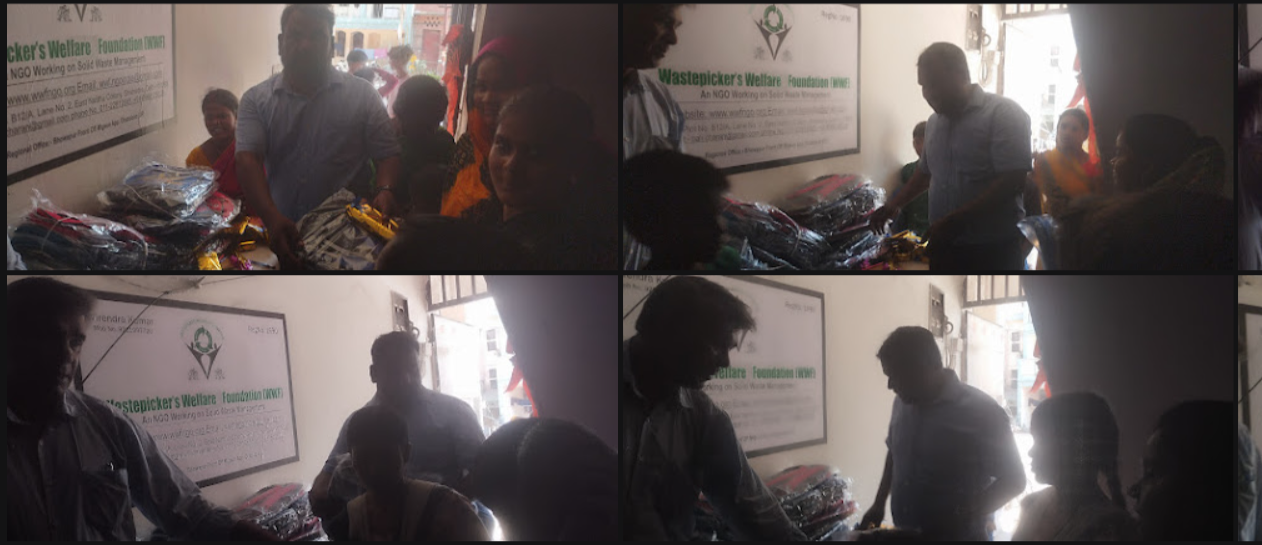
Sonu and Pooja wash up from a shared tap at the end of the lane, change into the polyester uniforms the CLC distributed, and head out. They each carry a notebook and a single pencil. The CLC provides an 11 AM snack, so their morning tea is just tea — no biscuit.
11:00 AM — The Scrap Buyer Arrives
The kabadiwala pulls up in a Tata Ace. Weighing is by hand scale. PET is at ₹18/kg this week, down from ₹24 three months ago. Today's 40 kilos of mixed material sells for ₹450. Kamlesh counts the cash twice. It is a decent day.
1:30 PM — Lunch and Rest
Dal, roti, a little sabzi. The children are back from school. Pooja reads aloud from a Hindi story — a confidence the CLC drilled in since she was six.
3:00 PM — Second Round
Kamlesh pedals to a commercial lane. Evenings are about corrugated cardboard from shops. Rekha joins the SHG meeting at the community centre — this week's agenda: reviewing the bulk order from a partner for 500 cotton tote bags.
7:00 PM — Everyone Home
Homework at the CLC's evening slot for Sonu. Aman is asleep on Rekha's lap. Dinner is rice and kadhi. A small black-and-white TV shows a news bulletin.
9:30 PM — Lights Out
They sleep on a single charpai and two mats laid on the floor. A mosquito coil is lit. Tomorrow at 4 AM it starts again.
What This Day Tells Us
There is no spare hour. There is no contingency fund. A single illness, a single scrap-price crash, a single accident, and the family slips into debt with a local moneylender at 10% per month. Our entire programme design is calibrated to that fragility — education to change the next generation's trajectory, health camps to prevent the cascading medical debt, SHGs to create a shock absorber, skill training to build an alternative income.
If this reads routine, that is the point. It is the routine that needs partners. How to help.