Solid Waste Management in Delhi: The Informal Worker's Perspective
When the Solid Waste Management Rules 2016 were notified by the Ministry of Environment, Forest and Climate Change, the informal waste sector received, on paper, its first explicit national recognition. Nearly a decade later, the gap between policy text and ground reality in Delhi remains wide. This post tries to close that gap from the perspective of the people doing the work.
What the SWM Rules 2016 Actually Say About Informal Workers
Rule 15 of the SWM Rules places duties on urban local bodies (ULBs), including:
- Establish a system to recognise organisations of waste pickers
- Facilitate their formation into Self-Help Groups, cooperatives, or associations
- Integrate them into door-to-door collection and material recovery activities
- Ensure their safety, health, and working conditions
The intent is progressive. The implementation is uneven.
What Privatisation Did to the Ground
Starting in the 2010s, municipal corporations across Delhi tendered large concession contracts to private operators for door-to-door collection and transport. Overnight, informal collectors who had served a colony for years — and who earned mainly by segregating at source — lost both access and income.
In the best arrangements, the concessionaire was required to absorb the informal sector. In most, no such clause was enforceable. The informal worker became someone to chase away at the gate, not integrate.
What Integration Should Look Like
- Registration and identity cards for every waste picker, linked to Aadhaar but not conditional on land tenure
- Contractual inclusion in every municipal door-to-door and material-recovery-facility tender, with penalties for non-compliance
- Dedicated sorting space — formal dhalaos and material recovery facilities where informal workers can operate under cover, safely
- Personal protective equipment — gloves, masks, boots, high-visibility jackets — distributed and replaced by the ULB
- Health cover — inclusion in Ayushman Bharat and state health schemes without paperwork barriers
- Income floor — minimum-wage guarantees for hours of formal municipal work, over and above scrap sale income
Where Waste Pickers Welfare Foundation Adds Leverage
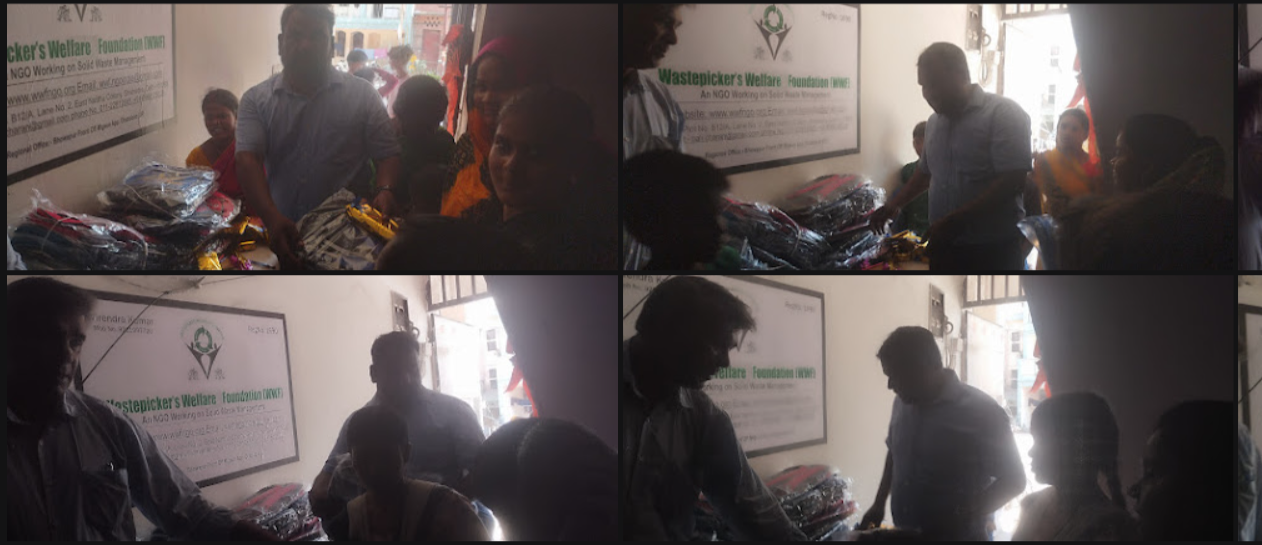
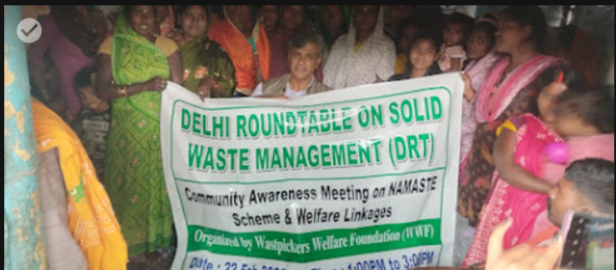
We run the health, education, and skilling programmes the ULB does not. Equally important, we sit at roundtables with MCD, Delhi Jal Board, and partner private operators — carrying the actual voice of the community into rooms where tenders are designed. Every small policy adjustment we win there lasts longer than any single camp.
The Civic Ask
If you are a resident, a RWA member, or a corporate operating in Delhi: please do not chase the waste picker at your gate. Segregate at source — wet, dry, hazardous — into separate bins. Invite your regular collector to take dry waste directly; they earn more per sorted kilo than per mixed kilo, and you reduce what reaches the landfill. It is the simplest act of civic partnership available to any household.